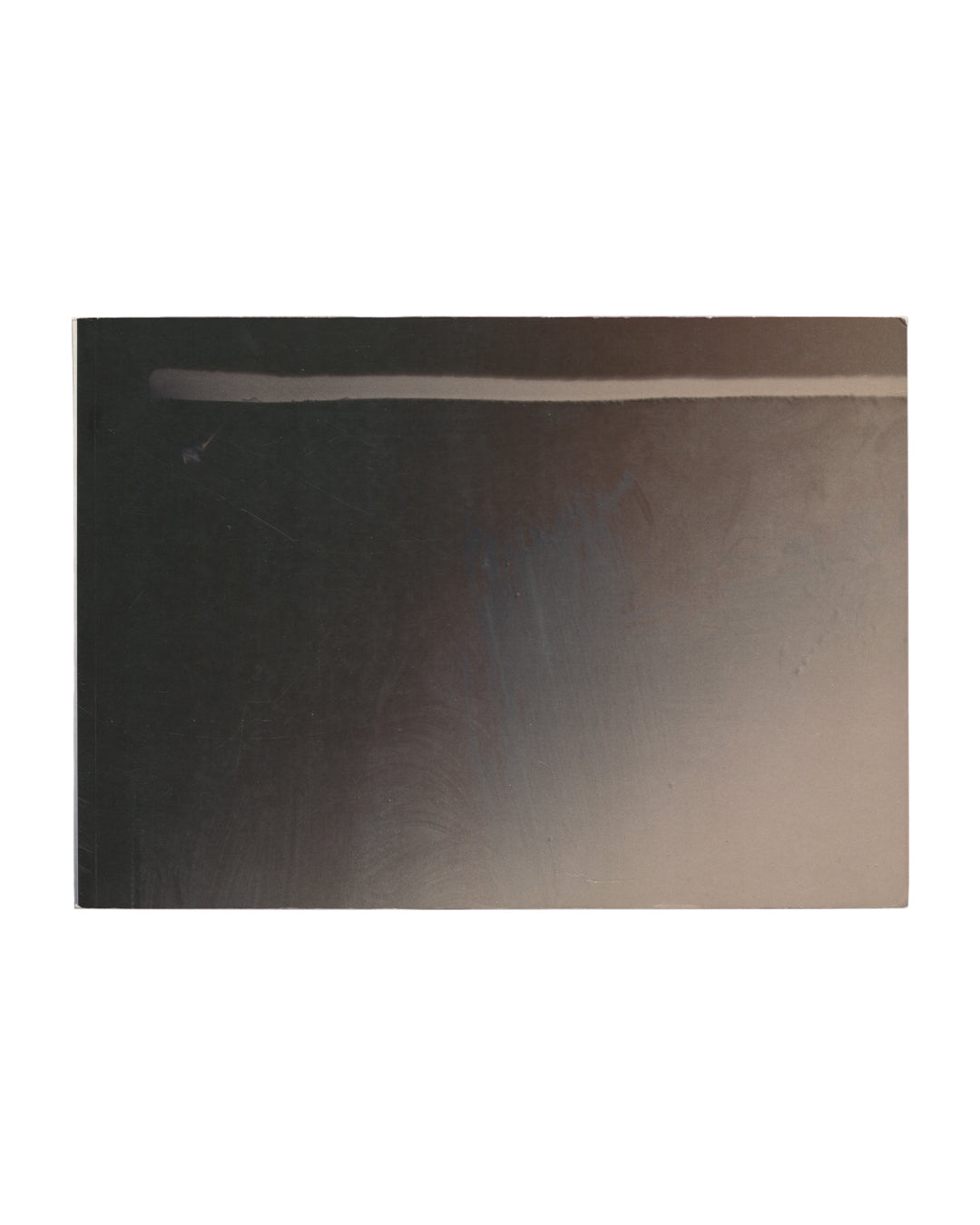
Kärntner Landesgalerie
Richard Tuttle — Warm Brown, 1–67 and Mesa Pieces, Kärntner Landesgalerie, 1995
Richard Tuttle — Warm Brown, 1–67 and Mesa Pieces, Kärntner Landesgalerie, 1995
- Artist
- Richard Tuttle
- Publisher
- Kärntner Landesgalerie
- Place & year
- 1995
- Type
- Exhibition Catalogue
- Format
- Softcover, 136 pp., colour illustrations throughout
- Size
- 29 × 21 cm
- Condition
- Good vintage condition: light handling wear, minor edge rubbing, and gentle age toning consistent with use and storage.
- Register
- TNR-2026-0238 · 17 June 2026
Couldn't load pickup availability
Shipping: UK £7, free over £50 · Europe £18 · US & Canada £25 · Rest of world £30.
Duties and import taxes may apply outside the UK.
Notes
Richard Tuttle occupies a singular position in postwar American art. Emerging in New York in the late 1960s, he developed a language that rejected the heroic scale of Minimalism while retaining its economy of means. Working with paper, wire, cloth, cardboard, found materials, and modest gestures, Tuttle transformed seemingly insignificant forms into highly attentive encounters with space, perception, and language.
Published in conjunction with an exhibition at the Kärntner Landesgalerie, Klagenfurt, this substantial catalogue documents the Warm Brown and Mesa Pieces bodies of work — an important period in which Tuttle pushed further into fragile constructions, asymmetrical forms, and his distinctive use of humble materials. The reproductions reveal works that appear almost provisional: painted cardboard, torn edges, pinned surfaces, and irregular geometries that resist easy classification as painting, sculpture, or drawing.
What makes this publication particularly compelling today is that it records a moment before Tuttle’s position became fully institutionalised. The catalogue captures works that remain surprisingly fresh and difficult, standing apart from the spectacle-driven tendencies that increasingly defined contemporary art during the same period. The physical modesty of the works contrasts with the sophistication of their visual thinking.
As an artefact, the book functions as more than exhibition documentation. It preserves a body of work whose material delicacy often exceeds what reproduction can fully communicate. For researchers, collectors, and artists, it remains one of the more substantial records of Tuttle’s ongoing investigation into scale, touch, and the expressive potential of seemingly negligible forms.
Shipping and handling included in the listed price.
Share