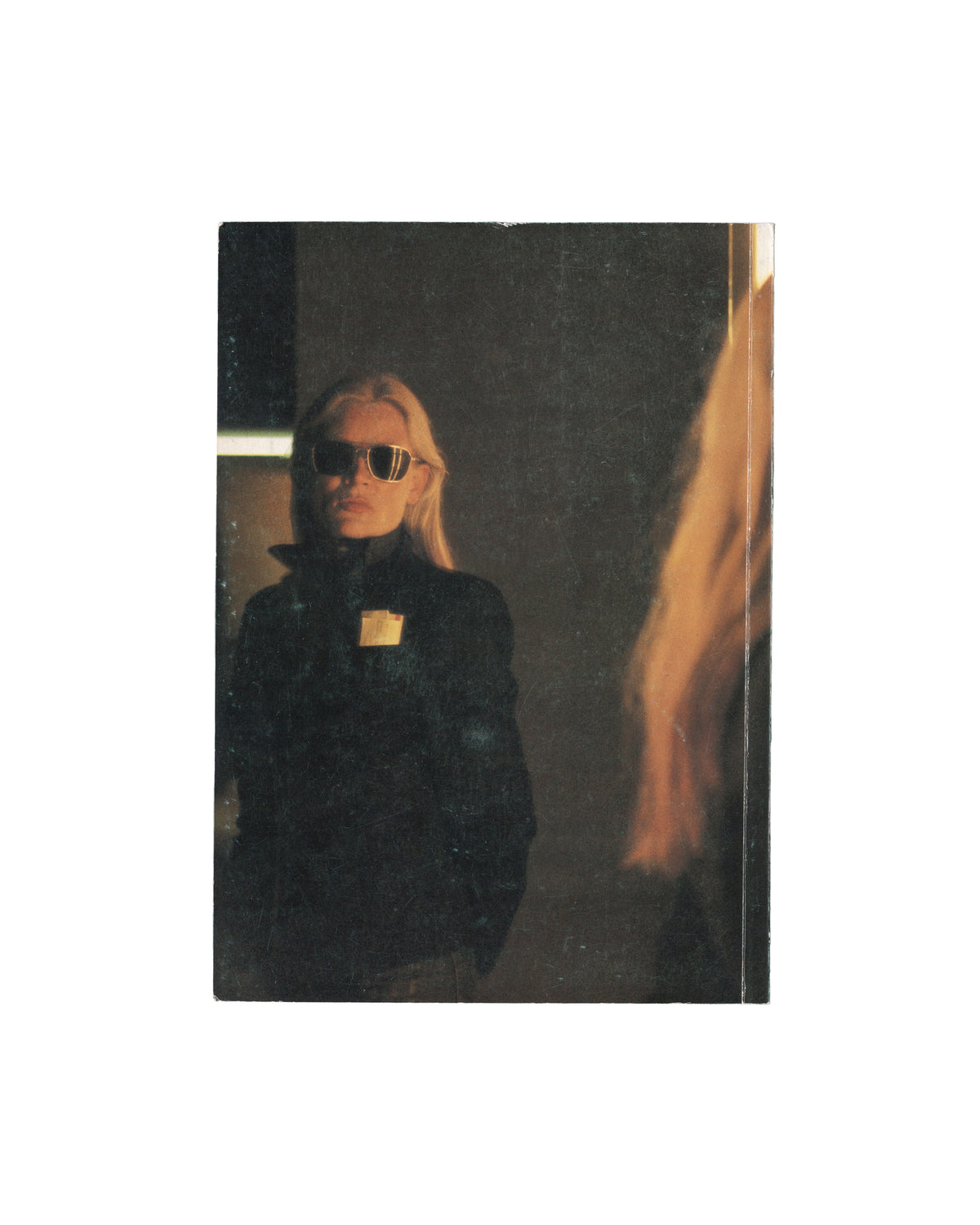
Museum Folkwang
KATHARINA SIEVERDING, Grossfotos I–X / 75–77, Museum Folkwang, Essen, 1977
KATHARINA SIEVERDING, Grossfotos I–X / 75–77, Museum Folkwang, Essen, 1977
Couldn't load pickup availability
Museum Folkwang, Essen, 1977. Published for Grossfotos I–X / 75–77, Museum Folkwang, Essen, 21 October–20 November 1977 — Sieverding's first museum solo exhibition. 21 × 29.5 cm. 44 pp. Illustrated softcover exhibition catalogue, offset printed throughout in colour and black-and-white. Glossy photographic wrappers using two closely related portraits of Sieverding in dark glasses. Condition: good to very good. General rubbing and surface scuffing to the glossy wrappers, with light edge and corner wear consistent with age and handling. Interior clean and well preserved.
The exhibition began with Rudi Fuchs, then director of the Van Abbemuseum in Eindhoven, who proposed showing the first ten Grossfotos. Essen ultimately presented them first; Bonn followed in 1978 and Eindhoven in 1979 as the cycle expanded. Sieverding installed the ten monumental photographs so that entering the museum would feel like moving between ten films running simultaneously. She later remembered the critical reaction in three words: controversial, sceptical, critical. For her, that resistance meant the exhibition had worked.
Contemporary criticism confirms the argument was real. Reviewing the show in Die Zeit in November 1977, Georg Jappe objected that Sieverding's colossal colour photographs were making a claim on the territory of painting that they could not yet fulfil. He singled out The Great White Way Goes Black, made in New York during the blackout of 13 July 1977, with Sieverding photographed by Klaus Mettig beneath the words THE GREAT WHITE WAY GOES BLACK. Sieverding later described the inserted language as carrying historical and semantic meanings, including a racial dimension. Text here does not caption the image so much as destabilise it.
There is an institutional irony too. Museum Folkwang staged this monumental photography exhibition in 1977; photography was only established there as an independent department the following year. The catalogue survives from the point before consensus. The photographs had become enormous. The museum had admitted them. The critic was objecting. The category itself was still being negotiated.
Share