British Film Institute
BFI Avant-Garde Catalogue 1994, with Distribution Materials, British Film Institute, London, 1994
BFI Avant-Garde Catalogue 1994, with Distribution Materials, British Film Institute, London, 1994
Couldn't load pickup availability
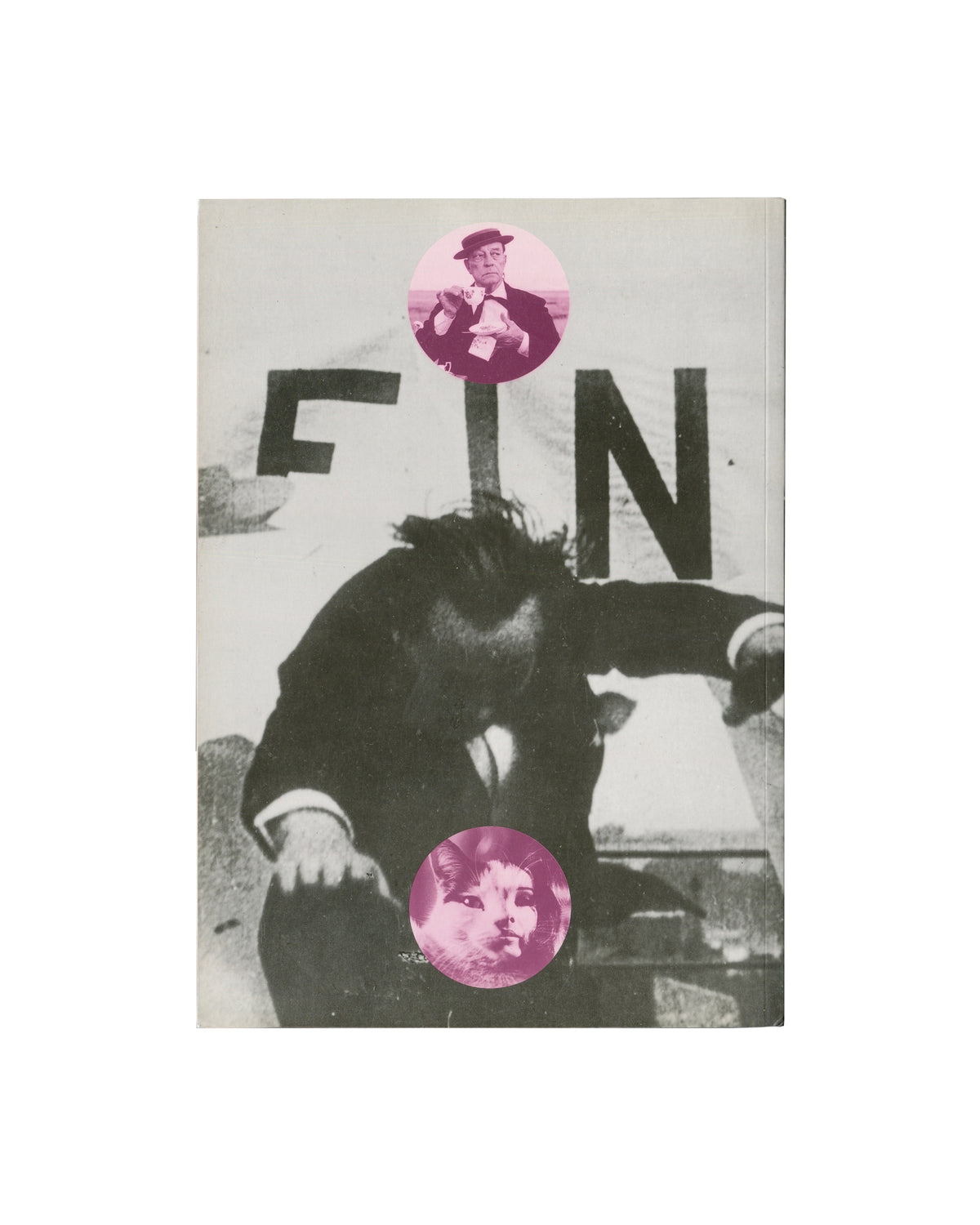
Distribution catalogue published by the British Film Institute, London, 1994. Illustrated softcover, printed in black and white with colour-printed wrappers. 63 pp., 21 × 29.5 cm.
Accompanied by original BFI Distribution paperwork retained with the catalogue: the New Releases 1994/95 sheet, and dated press notices for the re-releases of Louis Malle's Lift to the Scaffold (19 January 1995) and Sam Peckinpah's Straw Dogs (25 January 1995). Catalogue and retained paperwork are offered as a single object.
This was never intended as a history of avant-garde film. It was the mechanism for obtaining it. Before a database or a hyperlink, the route from interest to screening ran: name → title → format → booking → physical print → projector. The catalogue is how that route was navigated. Institutional holders — University of the Arts London's British Artists' Film and Video Study Collection among them — classify it accordingly: as a distribution catalogue, complete with director, subject and title indexes built for retrieval rather than continuous reading.
1994 catches British artists' moving image at a specific hinge point: descended from the London Film-Makers' Co-operative and 1970s structural/materialist film, passed through a less doctrinaire 1980s of queer, Black, feminist and post-punk practice, and produced before artists' moving image became as fully normalised within museum and gallery programming as it would over the following decade. The back page makes the institutional apparatus visible in full: this Avant-Garde volume sits alongside separately issued Animation and Gay and Lesbian catalogues, with Early and Silent, Women, and Black and Asian volumes listed as forthcoming — the BFI's holdings sorted into circulating, bookable silos, of which this is one.
The individual entries hold their own. Mark Rappaport's Rock Hudson's Home Movies is billed exactly as it plays — "Rock Hudson returns from the grave to expose the crushing weight of secret identity within the movies' roleplaying." Mitra Tabrizian's The Third Woman is catalogued in the same register as everything else on the page: 16mm, 22 minutes, £25, a synopsis and nothing more — sexual politics inside the post-revolutionary Iranian left, filed next to Nick Park's The Wrong Trousers and a film about a haunted bed and breakfast in Bexhill-on-Sea. Nothing in the catalogue's own formatting distinguishes major from minor, canonical from obscure. The booking system doesn't editorialise.
What lifts this particular copy is what stayed with it. The retained sheets extend the catalogue's own logic past the moment of printing. The New Releases 1994/95 update moves between Andrew Kötting, Mark Rappaport, Simon Pummell, Mike Stubbs, Mitra Tabrizian and Nick Park before the same distribution office issues separate press notices for Louis Malle and Sam Peckinpah — repertory reissue running through the identical administrative channel as experimental short. That is a more accurate picture of how the BFI actually functioned than any later, tidier division into "artist film," "cinema" and "animation" would allow.
The Peckinpah sheet is the standout. Dated 25 January 1995, it describes Straw Dogs as still refused a video classification — not retrospective colour, but a live description of an unresolved case. The BBFC's own record confirms the film's genuinely tortuous path: pulled from video circulation in 1988, formally rejected again in 1999, and only passed uncut for home release in 2002 — a full seven years after this notice went out. The sheet catches the controversy mid-flight, explicitly framed by its 1995 author against the contemporary furore over Reservoir Dogs and Natural Born Killers.
Condition: Good to very good. Catalogue with light handling, rubbing and edge wear. Accompanying distribution sheets show folds, staple marks, corner and edge wear consistent with their original working function.
Share