Armando Museum / De Zonnehof Centrum voor Moderne Kunst
ARMANDO, The Beauty of Evil / De Schoonheid van het Kwaad, Armando Museum / De Zonnehof, Amersfoort, 2001
ARMANDO, The Beauty of Evil / De Schoonheid van het Kwaad, Armando Museum / De Zonnehof, Amersfoort, 2001
Couldn't load pickup availability
Exhibition publication produced for De Schoonheid van het Kwaad, the six-month project presented across the Armando Museum, De Zonnehof Centrum voor Moderne Kunst, FotoForum and Theater De LieveVrouw, Amersfoort, 14 October 2001–14 April 2002. Bilingual Dutch/English text by Ernst van Alphen. Staple-bound, offset printed in colour. 18 pp., 17 × 24 cm.
Participating artists: Armando, Eleanor Bond, Koos Breukel, Marlo Broekmans, Marlene Dumas, Anselm Kiefer, Cindy Marler, Shirin Neshat, Raffael Rheinsberg, Julian Rosefeldt & Piero Steinle, Thomas Ruff, Andres Serrano, Roman Signer.
The title is not a curatorial flourish. It is Armando's own, decades in the making. Growing up close to the wartime camp at Amersfoort, he returned obsessively to what he called the "guilty landscape" — ground capable of witnessing violence, remaining beautiful, and eventually concealing what had happened there. By the early 1990s critics were already using the phrase to describe his work as a whole; Armando himself used a version of it in his own prose through the 1970s and 80s. In 2001, three years into the life of his own museum, that private artistic problem becomes the organising proposition for a group show — and Armando is placed not as elder statesman but as the lens through which a younger, international generation gets read.
The roster is disproportionate to the object carrying it. Eighteen pages hold Dumas, Kiefer, Neshat, Ruff, Serrano, Signer and Rosefeldt & Steinle alongside Armando himself — painting, photography, video, performance and conceptual practice, brought together not by medium but by a shared interest in beauty's complicity with violence. The Ruff/Serrano spread makes the point without illustrating it literally: Ruff's anonymous, night-vision-green non-place opposite Serrano's hyper-aestheticised Bodybuilders — surveillance and spectacle, artificiality and physical power, seduction and unease, given no caption beyond the facts of name and date.
The publication is also, materially, a residue. This was not one exhibition in one building but a project distributed across four Amersfoort venues over six months — a fact this modest, staple-bound booklet gives almost no outward sign of. Ernst van Alphen, who had published his study Armando: Shaping Memory the year before, provides the bilingual text: fitting, given his broader scholarly concern with how traumatic history becomes image.
The timing adds a charge nobody involved could have planned for. The exhibition opened 14 October 2001 — thirty-three days after September 11 — at the exact moment "evil" re-entered political language with a force it hadn't carried in decades. There is no evidence the show was conceived in response; a project spanning four venues over six months does not get planned in a month. But contemporaries noticed the collision regardless: critic Cornel Bierens, writing in NRC Handelsblad on 26 April 2002, discussed De Schoonheid van het Kwaad explicitly alongside the post-9/11 American rhetoric of evil and Mirroring Evil: Nazi Imagery/Recent Art at the Jewish Museum, New York. Petra Halkes discussed the exhibition in "Beauty Marks" for Border Crossings (issue 82, May 2002), placing Armando's proposition alongside work by Dumas, Kiefer, Ruff, Serrano, Rosefeldt and others.
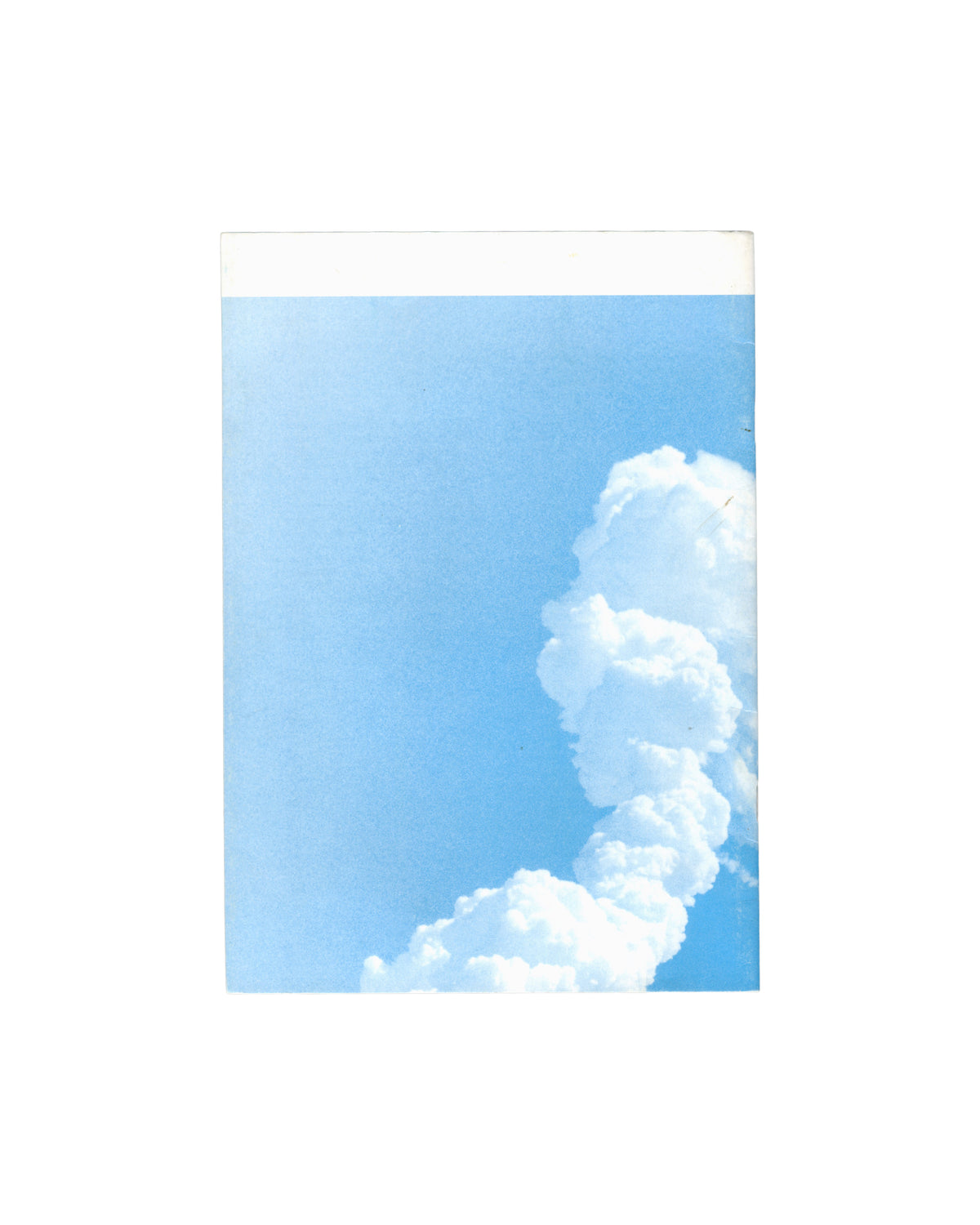
The cover does the same work as the title. A pale blue sky, a swelling white plume — cloud, at first glance. Then it isn't. Nothing has visibly happened. The title is what converts it.
Condition: Very good. Light handling and minor surface marks to wrappers, slight edge and corner wear and a few small age-related marks; internally clean.
Share