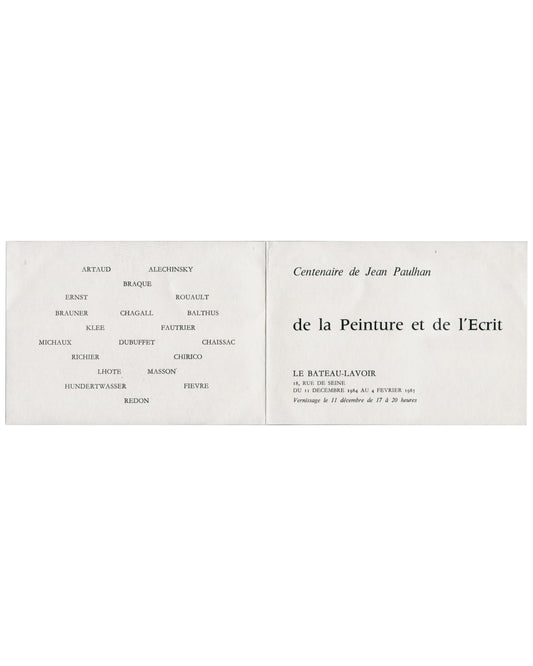
Collection: Hundertwasser
Friedensreich Hundertwasser (1928–2000, Vienna) was an Austrian painter, printmaker and architect whose practice from the late 1940s onwards developed a highly distinctive visual language of spirals, organic forms, vivid colour and anti-rationalist ornament in direct opposition to the functionalist aesthetics of modernist design. Born Friedrich Stowasser, he adopted the name Hundertwasser — meaning ‘hundred waters’ — as an expression of his commitment to a more poetic and humanist relationship between art, architecture and the natural world.
His paintings, produced in egg tempera, watercolour and mixed media on a variety of supports including jute, polyester and metallic foil, combined dense, labyrinthine patterning with figurative elements — trees, windows, human figures — rendered in jewel-like colour. His printmaking practice, particularly his screenprints and etchings produced in collaboration with master printers in Vienna, Tokyo and Hamburg, brought his imagery to a wide international audience from the 1960s onwards.
Hundertwasser’s architectural projects — including the Hundertwasserhaus in Vienna (1985) and the Kunst Haus Wien (1991) — applied his principles of organic form, uneven floors and roof gardens to built structures, making him one of the most publicly visible artists of the late twentieth century. His work is held in major collections internationally, including the Albertina, Vienna, and the Museum of Modern Art, New York.